Archive for the ‘Heat Pumps’ Category

What Size Heat Pump Is Right for My Doylestown Home?

Wednesday, January 4th, 2012

215.346.7160

One of the most important questions to answer when purchasing and installing any new heating or cooling system, no matter what type, is what size is best for your Doylestown home. You need something that has enough capacity to heat or cool your whole home comfortably; otherwise your house will consistently be at an undesirable temperature.

Some people might think that the quickest solution to this problem is to just buy a system that they are sure has a capacity larger than the size of their Doylestown home. You may even be tempted to get the biggest model out there, under the logic that the biggest is the best and it will be sure to be able to cover your whole house.

While this line of thinking might make sense to you, it’s actually not a good idea. The problem with this “solution” is that you can wind up with a heat pump that is considerably too large for your needs, which means your home will consistently be either too cool or too hot, and your energy bills will be unnecessarily high.

The best way to choose a new heat pump is to have a professional do a load calculation in your home. This can be a highly technical process, so it is best to leave it to the pros. However, here are some quick tips and other things to consider on the subject:

  • There are a lot of variable to consider in doing a calculation like this. A Doylestown contractor doing a load calculation will consider the type of construction, what kind of insulation you have installed, what kind of windows you have, whether there is an attic, how many people live there and many more factors.
  • It never hurts to shop around. Get a few estimates from different area contractors, rather than just going with the first opinion.
  • Also, since heat pumps are used for both heating and cooling, different contractors may opt to do the calculation in different ways. Some will estimate capacity based on heating, while others will base it on cooling. Ask to see which is the case for each estimate you receive.
  • If you are getting a new heat pump as a replacement for an existing one, or even a different heating/cooling system, check the capacity of the unit you are replacing. That can be a good place to start. You will at least be in the right ballpark.

All of this means doing some extra leg work up front, but getting the proper sized heat pump is well worth the effort.

Do I Need to Supplement My North Wales Heat Pump With Another Heating System?

Monday, January 2nd, 2012

215.346.7160

People often turn to heat pumps as a solution for their North Wales home heating and cooling needs because they want a single, all-inclusive system that covers all the bases. The convenience and simplicity is part of the allure of choosing a heat pump to begin with.

However, it’s not always that simple. There are situations where a heat pump is not enough to handle the needs of the whole home. This doesn’t necessarily mean that the whole idea goes out the window, but the heat pump may need some help in the form of a supplementary heating supply.

Here are some reasons/situations that may call for a supplemental heat source in North Wales in addition to a heat pump:

  1. A Cold Climate – Although heat pumps can serve as the primary heating system when temperatures drop as low as 30 degrees Fahrenheit, they have trouble keeping up when the cold snap lasts longer than a few days. In any climate where temperatures dip below this mark for a length of time, a supplemental heating system is recommended.
  2. A Large Home – Heat pumps come in many different sizes, but if yours does not have the capacity to match the size of your home, then it won’t be able to heat the whole house. It’s as simple as that. If you are installing a new heat pump, be sure to get one that is properly sized. But, if you have an existing heat pump that is overmatched by your home’s size, simply supplementing it may be the easiest solution.
  3. The Power Goes Out – A heat pumps’ use of electricity is a benefit in most situations, but unfortunately it means they are helpless when the power goes out. To avoid suffering in the winter chill when a blizzard takes out a local power line, have a backup/supplemental heat source on hand to use until the power comes back on.

Those are a few situations you may encounter in which supplementing a heat pump is a good idea. Remember, though, that each situation is different. When installing a new heat pump, consult with a North Wales installer beforehand to see if you should also have a supplemental heat system in addition to the heat pump. This is especially important if you live a cold climate.

Heat Pump Settings and Your Comfort Level in Fort Washington

Friday, December 2nd, 2011

215.346.7160

Your heat pump has a number of settings that can affect your Fort Washington home’s overall comfort level. One of those settings is the fan – which can be set to run automatically when heating is needed or left on continuously so that the device never turns off. Which is better for your home, though? Let’s take a look.

Comfort vs. Economy

The reason there are two settings on your heat pump is that one is more economical. The auto setting allows the device to minimize how often it is on. So, it only turns on when the house needs warm air to maintain the thermostat setting.

On the other hand, the always on setting is designed to provide better comfort. When you leave your heat pump’s fan on continuously, it provides steady heat over time. This means that the temperature remains consistent and mixes the air to ensure there are no uncomfortable pockets of poorly conditioned air in your home somewhere.

Which Is Better?

In terms of comfort level, it depends on your needs. If you’re not too picky about the exact temperature of your home, the auto setting is best because you will save money and it tends to be fairly accurate. However, if you want to ensure you and your family are perfectly comfortable, regardless of the weather outside, the always on setting is the best way to achieve this level of comfort.

Of course, if you’re concerned about the added cost of leaving the heat pump fan on all the time, you can adjust the thermostat to even out the cost. By raising the thermostat 2 degrees in the summer and lowering it 2 degrees in the winter, the added cost of running it constantly should be offset. If it isn’t, you should have your device inspected to ensure both of the settings are properly calibrated.

Pros and Cons of Heat Pumps: Some Information from Blue Bell

Wednesday, October 26th, 2011

215.346.7160

When deciding on any major purchase in Blue Bell, a critical step is to weigh the pros and cons. This helps you to decide on the best option and reach the best decision for your needs and preferences. You certainly know that already, but it is a step that people sometimes overlook in their excitement to get something new, so it bears mentioning.

Installing a new heating system is a perfect example of a situation in which you would need to weigh pros and cons. There are a lot of options, and not all of them are right for all people. Take heat pumps, for example. They are great devices and serve many people extremely well as home heating solutions, but they are not without their drawbacks. Below are some of the pros and cons of heat pumps to help you decide whether a heat pumps if the way to go for you.

Pros:

  1. Inclusive – A heat pump not only heats your home in the winter but also cools it in the summer, thanks to a reversing valve that changes the flow of the refrigerant. Having one appliance for both heating and cooling can be very convenient.
  2. Energy efficient – Heat pumps are extraordinarily efficient when it comes to energy use. Because they simply move and distribute heat, rather than producing any on their own, they use minimal electricity.
  3. Simple – Operating on the same basic principles as your refrigerator or an air conditioner, heat pumps are relatively simple. More importantly, they simplify your life by putting your heating and cooling solutions in one package and running on electricity, so you don’t need any other fuels on hand.
  4. Inexpensive to operate – In addition to being energy efficient – which lowers your monthly energy bills – many heat pumps are eligible for federal tax credit. You can save a bundle by using a heat pump.

Cons:

  1. May need supplementing in cold climates – In climates where winter temperatures stay below 30 degrees Fahrenheit for a while at a stretch, a heat pump will have trouble keeping up and need to be supplemented.
  2. Don’t work in power outage – Obviously, because they are powered by electricity, a heat pump won’t work in a power outage, unlike some other heating solutions that do not require electricity.

Although the pros clearly outweigh the cons here, the cons are important as well. Carefully consider all these factors and more while deciding whether a heat pump is the solution for you.

What Happens if My Heat Pump Loses Power? A Question from Lansdale

Monday, October 24th, 2011

215.346.7160

One of the advantages of having a heat pump in your Lansdale home is that they operate on electricity, so you don’t need to worry about having maintaining a supply of fuel to keep yours running. Where a furnace or boiler might call for you to purchase supplies of oil or natural gas, and a wood stove means keeping potentially messy firewood around, a heat pump runs cleanly on electricity.

Heat pumps are good at using electricity, too. They are often able to produce heat energy that can be as much as three times the electricity they draw to produce it. This means not just convenience, but also a big savings, just by virtue of using electrical power.

The risk there, of course, is that if and when the power goes out, so does the heat pump. That means when a big winter storm drops a tree on the local power line, things can get cold inside mighty quickly. For these situations, you should have a backup heating solution on hand to keep everyone comfortable in the short term. And, as a responsible homeowner, you likely already have this taken care of.

But what happens when the power comes back on? Can you just fire your heat pump right back up without missing a beat?

The short answer is “no.” You should not do that, for at least two reasons. First of all, after any power outage, you should always take care to turn on appliances gradually over a period of time rather than all at once in order to avoid a spike in demand at the power company, which can blow a grid. That’s just a general tip.

Specific to heat pumps, though, there is a unique concern. If the heat pump loses power for more than 30 minutes, the refrigerant can get too cold to flow properly, so turning it right back on can cause the whole thing to conk right out. Instead, do the following:

  1. Make sure the heat pump is off. You can do this during the power outage.
  2. Once power comes back on, turn the heat pump to the “Emergency Heat” setting. This will allow the compressor to warm up slowly and get the refrigerant warm enough to start flow freely again.
  3. Wait. The time you need to wait varies depending on the size and manufacturer of your heat pump, so refer to the manual. In general, you should wait at least 6 hours.

After this process, your heat pump should be ready to resume normal operation without issue.

What Is a Water Source Heat Pump?

Wednesday, March 9th, 2011

215.346.7160

A water source heat pump operates much like a traditional air source heat pump except that it extracts and dissipates heat by way of water instead of air. This is certainly not a type of home comfort system that will be available to anyone, but if you live in an area close to a well, lake or other natural water source, it may be an option worth considering.

All types of heat pumps can provide excellent year round home temperature control by pumping heat in during the winter months and removing it during the summer. The main difference between the types of heat pumps is where they get the heat or dispose of it.

Traditional air source heat pumps get their heat from the air outside, as even relatively cold air actually contains a substantial amount of heat. They use this heat to keep your house warm in the winter, but as the outside temperatures go down below freezing, these heat pumps can become less and less effective.

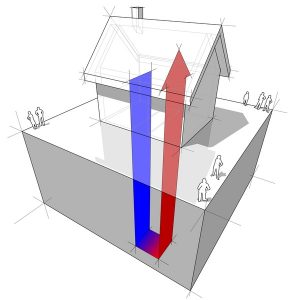
Water source heat pumps, on the other hand, work on basically the same principle as air source heat pumps, but they extract heat from a body of water rather than the air. They do this by cycling water through a system of pipes that is laid out at the bottom of a body of water. As the water cycles through, it gathers heat from the lake or reservoir and then carries it back to your house.

In the summer, the process is reversed and heat is carried out of your house and expelled in the cooler water outside. Like air source heat pumps, water source heat pumps are slightly more efficient at cooling rather than heating, as even deep water will eventually get cold during the winter months. However, the water is still often warmer than the air, and so water source heat pumps can be a good alternative if you live in a slightly cooler climate.

Of course, you do also need to have access to an appropriate body of water to have a water source heat pump installed, which makes it something that is not available to everyone. But if you do live near such a body of water, a water source heat pump is definitely something worth considering.

Effects of Excessive Snow on Heat Pumps

Thursday, January 27th, 2011

215.346.7160

Due to recent excessive snowfall, we wanted to pass along a few tips for our customers who own heat pump systems.

Heat Pumps and Snow

Excessive snow can reduce a heat pump's ability to heat your home.

1. Heat pumps draw air from the areas surrounding them (all four sides of the outdoor unit). It is important to clear these areas of snow and ice build up in order to allow air to freely reach the heat pump. This will allow the heat pump to operate as efficiently as possible and will alleviate strain on the heat pump.

2. If possible, the space (air gap) between the heat pump and the plastic or concrete pad that the unit itself sits on should be cleared of snow to allow for drainage. Customers who have had heat pumps installed by Carney will note that there are two concrete lentels (rectangular blocks of concrete) that sit on either side of the base of the heat pump. The area between those lentils is the area that should be cleared.

3. Generally speaking, most heat pumps discharge air in an upward direction from the top of the unit. It is important to make sure that this area is clear of snow and ice to allow air to easily discharge (this is the air that is being drawn from the sides of the unit noted in item #1).

A note to Carney customers for whom we have installed a Trane XLi heat pump system: Trane’s XLi series heat pumps employ a “Weathergaurd” top that is designed to protect the heat pump from the affects of snow and ice on the top of the unit. In most cases snow and ice on the top of the unit will have no impact on an XLi heat pump. Air is discharged from the sides of the upper part of the heat pump instead. This area can be distinguished from the intake area as it is a) darker in color, b) plastic as opposed to steel, c) has a wider air gap between the fins and d) the direction of the louvers points upwards at an approximate 45 degree angle as opposed to downwards at the steel louvers. We have installed several hundred of Trane’s XLi series heat pump each year since 2003, so there is a good chance that you may own one – which is very beneficial at this time!
To help you identify if you own a Trane XLi heat pump, the following link will take you to an image of a Trane XL20i, which employs the same “Weathergaurd” top found on Trane XL16i, XL15i, XL14i and XL13i. http://www.trane.com/Residential/Products/Heat-Pumps/XL20i-Heat-Pumps

4. DO NOT attempt to forcefully remove ice build up from any part of the heat pump. If you cannot remove snow or ice easily with a broom or brush, do not try to pry or chisel ice from the unit. Doing so could cause severe or irrepairable damage to the heat pump.

5. If your heat pump is located in an area that is subject to exposure to melting snow and ice (such as underneath an overhang or gutter that may be frozen), check the unit repeatedly to ensure that ice has not built up inside the heat pump.

6. If you cannot clear the heat pump of snow and ice for any reason, switch the system to “Emergency Heat” at the thermostat. This will turn the heat pump off and engage electric resistance heaters that are located inside in order to provide heat for your home. This is a more expensive mode of operation for a heat pump system, so we do not advise continuing in this mode for more than a few days. If at that time, the snow and ice around the heat pump has not melted, feel free to schedule a service call with Carney and a technician from our service team will be happy to assist you.

Finally, if you are a geothermal heat pump owner – you have nothing to worry about! There is no outdoor unit, so there is no concern of snow or ice!

Further heating information can be found on our Heating FAQ’s Page.
As always, feel free to contact us with any questions or concerns at 215.346.7160 .

Furnace vs. Heat Pump

Wednesday, January 19th, 2011

215.346.7160

If you’re preparing to replace your existing heating system, you may very well be struggling with the question of whether to go with a furnace or a heat pump for all of your future home heating needs. Each of these systems have their own advantages and drawbacks, and once you’ve narrowed it down to one type or the other, you’ll still have a pretty wide variety of products to choose from.

Furnaces are still the most popular type of home heating equipment on the market. You can get furnaces that run on gas, oil or electricity, although gas furnaces are by far the most common type of furnace around these days. The latest models are extremely energy efficient, with AFUE ratings reaching into the high 90%s.

Like heat pumps, furnaces use ducts to transfer heated air throughout your home. They typically require regular maintenance once every year or two depending on the type of furnace you have, and they can be expected to last anywhere from 15 to 25 years when properly maintained. Most modern furnaces are also made to be compatible with a central air conditioning or cooling system as well.

Heat pumps, on the other hand, don’t generate the heat that they circulate throughout your house. Instead they are able to extract the heat from the air outside and pump it inside. This means that they use much less energy than even the most energy efficient furnaces.

However, heat pumps are only capable of heating your house comfortably when the outside temperature is above freezing. If you live in an area with particularly long and frigid winters, you’ll probably find that you need to supplement your heat pump with another heat source. Because of this, it actually makes little sense to use a heat pump in more extreme climates.

On the other hand, if you live in an area with relatively mild winters, heat pumps can be a great option. They provide a constant flow of warm air to all parts of your home and can also keep you house cool during hot summer months. To cool your home, heat pumps simply reverse the process they use to warm it. They take the heat out of your indoor air and pump it outside. This is a very effective home cooling method and makes heat pumps a great solution for year round comfort.

How Efficient Is a Heat Pump?

Thursday, January 6th, 2011

215.346.7160

Heat pumps are actually remarkably efficient when compared to some of the home heating alternatives out there. Especially if you’re already using electricity to heat your home, you can get generate huge savings on your monthly energy bills by switching to a heat pump system.

As their name suggests, heat pumps remove heat from the air and transfer that heat from one area to another. That means that in the winter, your heat pump will remove the heat from the air outside your home and pump that heat in to heat your home. During the summer months, that process is actually reversed, and heat pumps are able to cool your home by collecting the heat from your indoor air and pumping it outside.

Since heat pumps are actually just moving heat from one place to another rather than generating it all on their own, they don’t require much energy at all to operate. While you can buy furnaces that are as much as 97% energy efficient, they’re still using more energy than a heat pump would. The fact that the furnace is turning the vast majority of the energy that it uses into heat doesn’t mean that it still doesn’t require more energy to operate.

Just because heat pumps are more efficient than many other types of heating systems, you can’t just assume that all heat pumps are equally energy efficient. Just as different types and models of furnaces have different energy efficiency ratings, so too do the many types, sizes and models of heat pumps. Make sure you thoroughly compare your options before you settle on the right system for your home.

The energy efficiency rating of a furnace is easy to recognize, as each of them comes with a standard AFUE rating. If you’re looking to switch to heat pumps, however, it’s easy to get confused when you’re trying to compare the energy efficiency of various models.

Heat pumps actually have two separate measurements for energy efficiency. These are the seasonal energy efficiency ratio (SEER) and the heating seasonal performance factor (HSPF). Energy efficiency measurements for heat pumps reflect both the cooling and heating efficiency of the system, and so what’s best for you may vary depending on what you’re more likely to use your heat pump for.

How Does a Heat Pump Work?

Wednesday, January 5th, 2011

215.346.7160

If you’re in the market for a new home heating and cooling system, a heat pump is definitely an option worth considering. However, while the popularity of these systems is growing rapidly, many people still don’t understand what they’re all about. Before you go out and get yourself a new home comfort system, you should make sure you really know what you’re looking at.
As their name suggests, heat pumps move heat from one location to another. However, their name can be misleading as well. Heat pumps are able to both heat your home in the winter and keep it cool in the summer by taking heat from the air in one place and sending it to another.

For example, your heat pump will remove the heat from your indoor air in the summer and pump it outside to keep your home cool. In the winter, the process is reversed, and the heat pump gathers heat from the outdoor air and pumps it inside to keep you house warm.

Of course, it’s not hard to see how the air inside your home in the summer has heat in it. But the outdoor air in the winter is cold. So how does a heat pump heat your house with cold air? Well, the truth is that there is almost always some heat in the air, no matter how cold it seems to you and me.

In fact, the temperature would have to drop well into the negative range before there was absolutely no heat to be found in the air. And heat pumps are specially designed to find that heat and collect it.

Basically all heat pumps work on this principle. However, they can’t keep your house comfortable all on their own. Heat pumps are usually installed as part of a complete home heating and cooling system. This means they’ll be paired with an air handler that can circulate the temperature controlled air throughout the house.

There are also some heat pumps that supplement the amount of heat they’re able to pull out of the air by heating it as it passes through. These types of heat pumps are often more effective in cooler areas, but because they require more energy to actually generate heat, they’re not typically as energy efficient as models that rely on their ability to get heat only out of the air.

If you’re in the market for a new home heating and cooling system, a heat pump is definitely an option worth considering. However, while the popularity of these systems is growing rapidly, many people still don’t understand what they’re all about. Before you go out and get yourself a new home comfort system, you should make sure you really know what you’re looking at

As their name suggests, heat pumps move heat from one location to another. However, their name can be misleading as well. Heat pumps are able to both heat your home in the winter and keep it cool in the summer by taking heat from the air in one place and sending it to another.

For example, your heat pump will remove the heat from your indoor air in the summer and pump it outside to keep your home cool. In the winter, the process is reversed, and the heat pump gathers heat from the outdoor air and pumps it inside to keep you house warm.

Of course, it’s not hard to see how the air inside your home in the summer has heat in it. But the outdoor air in the winter is cold. So how does a heat pump heat your house with cold air? Well, the truth is that there is almost always some heat in the air, no matter how cold it seems to you and me.

In fact, the temperature would have to drop well into the negative range before there was absolutely no heat to be found in the air. And heat pumps are specially designed to find that heat and collect it.

Basically all heat pumps work on this princ

If you’re in the market for a new home heating and cooling system, a heat pump is definitely an option worth considering. However, while the popularity of these systems is growing rapidly, many people still don’t understand what they’re all about. Before you go out and get yourself a new home comfort system, you should make sure you really know what you’re looking at

As their name suggests, heat pumps move heat from one location to another. However, their name can be misleading as well. Heat pumps are able to both heat your home in the winter and keep it cool in the summer by taking heat from the air in one place and sending it to another.

For example, your heat pump will remove the heat from your indoor air in the summer and pump it outside to keep your home cool. In the winter, the process is reversed, and the heat pump gathers heat from the outdoor air and pumps it inside to keep you house warm.

Of course, it’s not hard to see how the air inside your home in the summer has heat in it. But the outdoor air in the winter is cold. So how does a heat pump heat your house with cold air? Well, the truth is that there is almost always some heat in the air, no matter how cold it seems to you and me.

In fact, the temperature would have to drop well into the negative range before there was absolutely no heat to be found in the air. And heat pumps are specially designed to find that heat and collect it.

Basically all heat pumps work on this principle. However, they can’t keep your house comfortable all on their own. Heat pumps are usually installed as part of a complete home heating and cooling system. This means they’ll be paired with an air handler that can circulate the temperature controlled air throughout the house.

There are also some heat pumps that supplement the amount of heat they’re able to pull out of the air by heating it as it passes through. These types of heat pumps are often more effective in cooler areas, but because they require more energy to actually generate heat, they’re not typically as energy efficient as models that rely on their ability to get heat only out of the air.

iple. However, they can’t keep your house comfortable all on their own. Heat pumps are usually installed as part of a complete home heating and cooling system. This means they’ll be paired with an air handler that can circulate the temperature controlled air throughout the house.

There are also some heat pumps that supplement the amount of heat they’re able to pull out of the air by heating it as it passes through. These types of heat pumps are often more effective in cooler areas, but because they require more energy to actually generate heat, they’re not typically as energy efficient as models that rely on their ability to get heat only out of the air.