Archive for the ‘Geothermal’ Category

$300 Off Any Geothermal Heat Pump System

Friday, December 16th, 2011

215.346.7160

Geothermal heating is a fantastic way to keep you home comfortable this winter. More and more homes are utilizing geothermal technology, not only because is it very energy efficient but it also costs very little to maintain. A geothermal heat pump uses the heat that naturally exists in the ground and utilizes it to raise the temperature of your home. Since no outside fuel, like gas or oil, is needed, there is very little cost to keep your system running. Carney Plumbing, Heating & Cooling employees geothermal installation experts; we can design and install the perfect geothermal system for your house. And right now we are offering a special deal – $300 off any Geothermal Heat Pump System! Now is the time to get a geothermal heating system installed in your house, it will help the environment and your wallet!

*Cannot be combined with other offers.

A Guide from a Quakertown Heating Contractor: The History of Geothermal Energy

Wednesday, November 30th, 2011

215.346.7160

Geothermal energy is nothing new – it just gets more ink because of its increasing use to naturally heat and cool buildings in Quakertown and around the county, leaving a smaller carbon footprint and providing for an efficient, more cost-saving method to achieve indoor comfort.

History shows that geothermal energy dates back over 10,000 years when American-Paleo Indians used hot springs for bathing and heating, possibly even as a source for healing. And geothermal energy is not just a North American “thing” either. The oldest known hot springs spa was built in the Qin dynasty in China in the 3rd century B.C.

Romans used the water from hot springs for their public baths. Geothermal water was also used by the Romans for treating skin and eye diseases. Minerals found in hot springs water has been long believed to have healing qualities. Geothermal water was also used to heat the buildings in Pompeii. Subsequently, building heat was obtained from under floor systems.

History notes that France is home to the world’s oldest known geothermal district heating system. The system in Chaudes-Aigues has been in use since about the 14th century. And starting in 1960, France began using geothermal heating for homes in other areas. Up to 200,000 homes in France are heated by geothermal means.

History also shows geothermal energy use during the late 18th century near Pisa, Italy. Geothermal energy had been used to extract boric acid from the Larderello Fields through the use of steam. In 1904 at Lardello Fields, steam was successfully used to generate power for the first time. At the time, geothermal energy was seen as the power of the future.

In the U.S. in 1892, the first district heating system in Boise, Idaho was powered directly by geothermal energy, and was soon copied in Klamath Falls, Oregon in 1900, where geothermal water was pumped under sidewalks and roads to help prevent freezing and ice build up. In New Mexico rows of pipe were placed underground to keep soil warmer for agricultural purposes.

A deep geothermal well was used to heat greenhouses in Boise in 1926.

For the residential market, an inventor built a “downhole heat exchanger” in 1930 to heat his house. The heat pump, which was invented in 1852, was patented to draw heat from the ground in 1912. However, it was not until the 1940s that the geothermal heat pump was successfully launched. Records show that the first commercial heat pump was put into use in Portland, Oregon in 1946. The first residential open loop system was installed in 1948.

In the 1960′s, the first large scale industrial geothermal energy power plant was constructed, producing 11 megawatts of geothermal electricity. From the 1960′s to the present day organizations and governing bodies have been set up to manage, research, and develop new and improved geothermal energy sites and technologies.

Today, there are many geothermal power plants in working order in the U.S. and across the globe.

Is Geothermal for Me? A Question From Lansdale

Friday, August 12th, 2011

215.346.7160

Geothermal heating is a great alternative to other types of home heating systems in Lansdale. It is safe and efficient, costs very little to operate and makes use of a great renewable resource right below our feet. But is it right for you? Well, geothermal heating may be the right choice for many people, but there are many things to take into account before you can determine whether or not it is the best choice for your home.

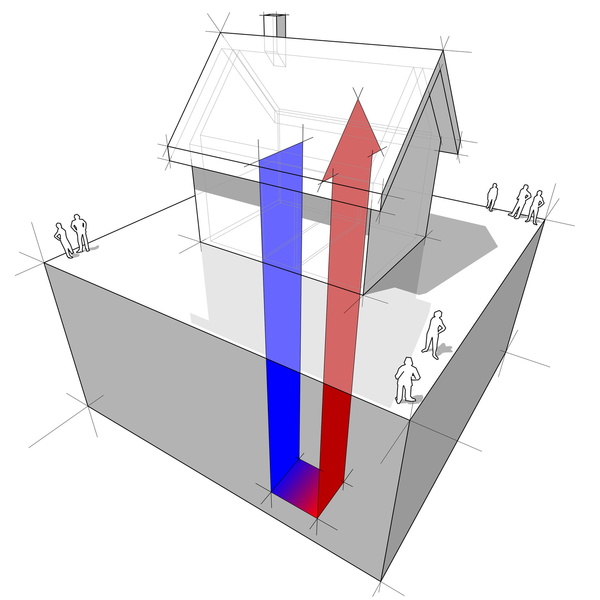
The first important thing to understand when you are trying to decide whether or not to go with geothermal heating is how one of these systems actually works. A geothermal system heats your home by extracting heat from the ground and then transferring that heat into your indoor air. This happens when liquid, usually water or antifreeze, passes through a loop of pipes installed several feet below the ground.

The liquid absorbs heat from the ground, which in the winter is always warmer than the air, and carries is back up to an air handler inside your home where that heat is allowed to disperse into the air. Once the air is heated, the air handler blows the air through a system of ducts throughout your house, providing a constant stream of heated air to all areas of your home. The liquid, on the other hand, simply cycles back through the ground loop to pick up more heat and repeat the same cycle over again.

Because a geothermal heating system does not actually generate heat, it requires very little energy to operate. This means that it is both very cheap for you to run and environmentally friendly. But since installing a geothermal heating system involves putting pipes in underground, it can be pretty expensive initially. However, as long as the amount you save every month on your heating costs is enough to offset the high initial price of installation, it is worth it to put down the money up front.

Another alternative, of course, is a more traditional air source heat pump. These are much cheaper to install and nearly as cheap to run. However, air source heat pumps are not as efficient when the air temperature gets below freezing as a geothermal system can be. If you live in an area with harsh winters, the geothermal heat pump is a better option than an air source unit.

Geothermal vs. Solar

Friday, April 29th, 2011

215.346.7160

If you are looking for a more environmentally friendly alternative to the traditional methods for home heating, you will probably consider both solar and geothermal options. Each of these relies on a great renewable resource to function and can be an excellent option depending on your specific circumstances. Of course, both geothermal and solar heating have limitations as well, so it is important to take these into account when you are evaluating your options.

A geothermal heating system works by extracting heat from the ground and transferring that to the air in your house. This occurs when heat is absorbed by a fluid flowing through a closed loop of pipes beneath or next to your home. The fluid then returns to your home, where the heat is extracted by a compressor and distributed throughout the house by an air handler.

This uses very little energy relative to a conventional heating system, as you only have to power the condenser and the air handler. The heat is not generated by the system but merely harvested, so total energy costs are quite low. However, the installation cost of a geothermal heating system can be many times what a conventional heating system would cost.

Solar heating relies on solar collectors to gather the heat from the sun. This heat is then passed into a system of heat pumps and heat exchangers so that it can be adequately distributed throughout your house. The installation of heat collectors, of course, is quite expensive as well, while the cost of running the system is generally low just as with the geothermal heat pump.

One advantage to opting for a solar heating system is that you can lease the equipment rather than buying it in some areas. This means that you do not have to pay the high installation costs and only pay a monthly fee to use the equipment which is usually comparable to what an average heating bill would be if you had a furnace.

But you also have to keep in mind that you need to have enough space to put up an adequate number of solar collectors to keep your house warm all winter. This often means giving up a lot of land, and if you have a lot, that is fine. But it is still something you need to take into consideration. Also, you need to make sure that the area you live in gets enough direct sunlight to make solar heating a viable option. Otherwise, you will be paying to run a backup system much of the time anyway.

Geothermal Myths

Friday, March 25th, 2011

215.346.7160

As with any misunderstood technology, there are a lot of myths and misconceptions concerning geothermal heat pumps and how well they work. While these types of systems certainly have their limitations, the same is true of just about any type of heating and cooling system you could have installed in your home. But if you are really trying to evaluate whether or not a geothermal heating system is right for your home, you need to know exactly what is true about these systems and what is just not true.

For instance, there is a widely held belief that geothermal energy is not a viable heating option in areas with harsh winters. The fact is, though, that even when the air temperature outside is below freezing, the temperature several feet below ground can be as high as 55°F.

With a ground temperature like that, a geothermal heat pump will have no trouble extracting enough heat to keep your home comfortable even when it is well below freezing outside. And even when the ground freezes, the frost usually only extends three or four feet below the surface. Since the pipes for your geothermal heat pump will be at least four feet down, the frost should not affect them at all.

Also, it is common for people to assume that geothermal heat pumps will always need to have a regular heating system in place to serve as a backup. In fact, a geothermal heat pump is quite capable of providing consistent and adequate heating for your entire house as long as it is properly sized and installed. Make sure you are dealing with an experienced and qualified contractor and you will have no problems along these lines.

There are also plenty of myths floating around out there that geothermal heat pumps are just too expensive to make sense as a home heating solution. The truth is that geothermal heating costs almost nothing to operate.

While it is true the geothermal systems are quite a bit more expensive to install than many of the other options, alternative heating systems will still cost a significant amount to install and you will also have to pay much more to operate them on a regular basis. With a geothermal heating system, you pay quite a bit up front, but it is a one-time cost and there will be minimal monthly heating bills after that.

How Does Geothermal Energy Work?

Wednesday, March 23rd, 2011

215.346.7160

Geothermal energy is energy extracted from the ground. This energy is in the ground in the first place because the ground absorbs the heat coming from the sun. This heat is always there, even when it is very cold outside. In fact, even when the ground appears to be frozen, you can actually extract plenty of heat to keep your home nice and toasty.

While this may at first appear to defy logic, the way that geothermal energy can be used for heating your home is actually quite simple. A geothermal heating system typically consists of an indoor air handler with a fan, a series of air ducts for the heated air to travel through and a closed loop of pipe that extends into the ground below and around your home.

This closed loop of pipe is actually where the geothermal heat is collected. Some type of liquid, usually water or antifreeze, will be continuously run through this pipe loop. As the liquid passes through the area of pipe that is below ground, it will absorb the heat from the surrounding soil. Once the liquid makes it back up to the air handler, the heat is able to disperse, heating the air in the chamber.

This heated air is then circulated throughout your house through the ducts by a fan. After it has released its heat into the air in your home, the liquid will cycle back into the ground to absorb more. This allows a geothermal heating system to provide you with a constant supply of warm air.

Unlike a furnace, which mixes in blasts of very hot air with periods of inactivity to try and keep your house at a constant temperature, a geothermal heat pump is able to provide a more consistent flow of air that is just the right temperature to keep your home comfortable. This means that these types of heat pumps are running just about all of the time as opposed to furnaces, but they are designed to work this way and the constant operation does not cause any excessive wear and tear.

Another great benefit of geothermal heat pumps is that they are able to keep your house cool in the summer as well. Just as the ground is warmer than the air in the winter, it is also cooler in the summer. That means that heat removed from your indoor air can be transferred to the ground in the same way that it was transferred in during the winter.

Is Geothermal Energy Renewable?

Monday, March 21st, 2011

215.346.7160

Geothermal heating systems take heat from the ground and transfer it to your home. But how does this heat get into the ground in the first place? Conventional heating systems like furnaces use energy sources like oil or natural gas to generate heat. These energy sources are not renewable, and neither is electricity which is typically generated by burning coal or another non-renewable resource.

The renewable resources we usually think of first are solar and wind power. The sun, of course, will continue to shine and provide heat year in and year out whether we make use of it or not. Similarly, we cannot use up the wind. It will continue to blow no matter how many times it has blown before.

But what category does geothermal energy fit into exactly? Well, it is actually a renewable resource just like solar or wind energy. In fact, geothermal energy is a direct result of the sun’s heat relentlessly pounding the ground. The ground actually absorbs a considerable amount of the heat from the sun that reaches the earth every day, and that is the heat that your geothermal heating system is using to heat your home.

Of course, a geothermal heating system cannot run on geothermal energy alone. The indoor components of this heating system that keep the air flowing throughout your house must be powered by electricity. But the amount of energy needed to do this is much less than what you would need to use to run a furnace or other type of more conventional home heating system.

Over all, geothermal energy is an excellent and renewable source of energy. And once you have the heating system in place, you will need to spend very little to keep it up and running. It is an excellent option for many people, and can help to keep your home cool in the summer as well.

Can I Use Geothermal Heat if I Live in a Cold Climate Where the Ground Freezes?

Friday, February 25th, 2011

215.346.7160

Geothermal heat pumps are able to extract heat from the ground, even when outdoor temperatures are well below freezing. They use a system of pipes installed in the ground below or around your home to collect this heat and then return it to your home where it can then be used to heat the air. While these types of heating systems are certainly more efficient the warmer the ground is, they can be effective even in very cold climates.

This is true even in areas where the ground freezes from time to time or for parts of the year because the frozen layer does not typically extend more than three or four feet below the surface. As long as the pipes for your geothermal heating system are below this level, they will still be able to gather plenty of heat from the warmer ground below the frozen layer.

In fact, there are two different ways that the pipe loop for a geothermal heating system can be installed. Most geothermal systems have a horizontal pipe system which sits about four feet below the surface and extends out from the house. This type of installation is typically cheaper than the alternative, but it also usually needs to be larger. Plus, you need to have the space for it to stretch across.

On the other hand, a vertical installation goes straight down into the ground below your home. With a vertical installation, you can usually get away with less pipe overall, but you will probably pay more for the installation because it is harder to drill straight down than it is to dig out a relatively shallow trench to lay the pipe in.

However, if you live in an area that has particularly harsh winters when the ground can be frozen for significant periods of time, it may be worth it to opt for the vertical installation. That is because the further below the surface the pipes go, the farther away they will be from the frozen layer of ground.

With a vertical pipe installation, a geothermal heating system can work quite well in a climate in which the ground usually freezes in the winter. While you will always want to have a backup heating system in place in case of emergencies, this type of heat pump should be all you need under normal conditions.

Will Switching to Geothermal Save Me Money?

Wednesday, February 23rd, 2011

215.346.7160

There are simply a ton of different types of heating systems and they are each more appropriate in different situations. However, some are certainly always going to be cheaper to operate than others, although that alone may not make one or the other right for you.

In the case of geothermal heating systems, the operating costs are definitely quite low. But those are not the only costs you will have to think about when you are considering what type of heating system to put in your home to keep your heating bills down.

Geothermal heating systems do not actually generate heat – they absorb it from the ground. Because of this, they actually use very little energy when they are running. All you are really paying to power is the fan that blows the heated air around your house. Also, because geothermal heating systems are more efficient at extracting heat in below freezing conditions than traditional heat pumps, they can continue to keep you warm on their own in more extreme conditions.

Traditional heat pumps, while they also cost very little to operate, do sometimes need to be supplemented by more conventional forms of indoor heating like a furnace when temperatures outdoors get too low. This is not the case with geothermal heat pumps, so if you live somewhere that has colder winters, a geothermal heat pump may be just what you are looking for. Of course, you can always opt for a furnace instead, but these will definitely cost more to run than either type of heat pump.

When you are trying to assess whether or not switching to a geothermal heating system will save you money, you first have to start with the heating bills you currently have. Then, factor in the cost of the geothermal heat pump installation as opposed to the installation of a more conventional system.

You are then in a position to see whether or not the amount the geothermal system will save you each month is enough to offset the higher cost of installation within a reasonable amount of time. Of course, the savings will always eventually add up over time, but if the length of time it will take you to break even is the same or longer than the expected life of the system, it is probably not worth it to invest in this type of heating.

What Is Geothermal Heating?

Tuesday, February 22nd, 2011

215.346.7160

Having a geothermal heating system installed in your home means that you will actually be able to heat your home with heat extracted from the ground. If this sounds a bit preposterous to you, you are certainly not alone. But this type of home heating does actually work and the technology is not actually that much different from what is used in a standard heat pump system.

Regular heat pumps are able to remove heat from the outdoor air and transfer it into your house to maintain a comfortable temperature in the winter. You may think that there is no heat in the outdoor air in the winter, but that is not actually the case.

Air contains a substantial amount of heat even at very cold temperatures, and heat pumps are able to work quite well, particularly when the outdoor temperature is above freezing. Conveniently, the same process used to heat your house in the winter can be reversed in the summer to extract heat from the indoor air, providing you with a year round home comfort solution.

Geothermal heating works in much the same way, except that geothermal heat pumps extract heat from the ground rather than the air. In order to accomplish this, a loop of pipes is installed in the ground near your house and your geothermal heating system will pump a liquid, generally either antifreeze or water, through those pipes.

As it passes through the pipes, the liquid will absorb heat from the ground and carry it back to a heat exchanger within your house. At that point, the heat from the liquid will be released into air, which is then blown throughout your house.

And just as conventional heat pumps can cool your house in the summer by removing heat and pumping it outside, so too can geothermal heating systems. They do this simply by letting the liquid flowing through the pipes absorb the heat from inside air and then release it into the ground as it travels through the pipe loop below your house.

Because the ground is never as cold in the winter or as hot in the summer as the air, geothermal heat pumps are actually able to work effectively in more extreme conditions than many traditional heat pumps. However, because they require an entire system of pipes to be installed underground, they can be quite a bit more expensive initially as well.